An example
Bleu Ginger is a polished, approachable Asian bistro a few streets back from the Mystic waterfront — sushi, noodles, dumplings, a serious cocktail list, and chef specials that change with what came in that morning.
The problem
The questions were always the same, and always at the worst moment.
On a Friday at seven, a server fielding the same four questions — what's gluten-free, what's popular, what's on special, do you take walk-ins — is a server not turning tables. Guests waiting outside had no way to find out whether it was worth the wait. And the questions nobody could answer never got written down anywhere.
What we did
Five touchpoints, one afternoon.
We walked the floor and put a sign where each kind of question actually gets asked. Each one runs its own host with its own brief, so the sign by the door greets and orients, and the card on table nine talks about food.
| Location | Touchpoint | Purpose |
|---|---|---|
| Outside Entrance | Floor sign | Waiting guests, before they decide to stay |
| Main Dining Room | QR table card | Menu, allergens, specials |
| Bar Area | Wall sign | Cocktails and happy hour |
| Outdoor Patio | QR table card | Heaters, dogs, weather |
| Private Events Room | Wall sign | Capacity and minimums |
The sign
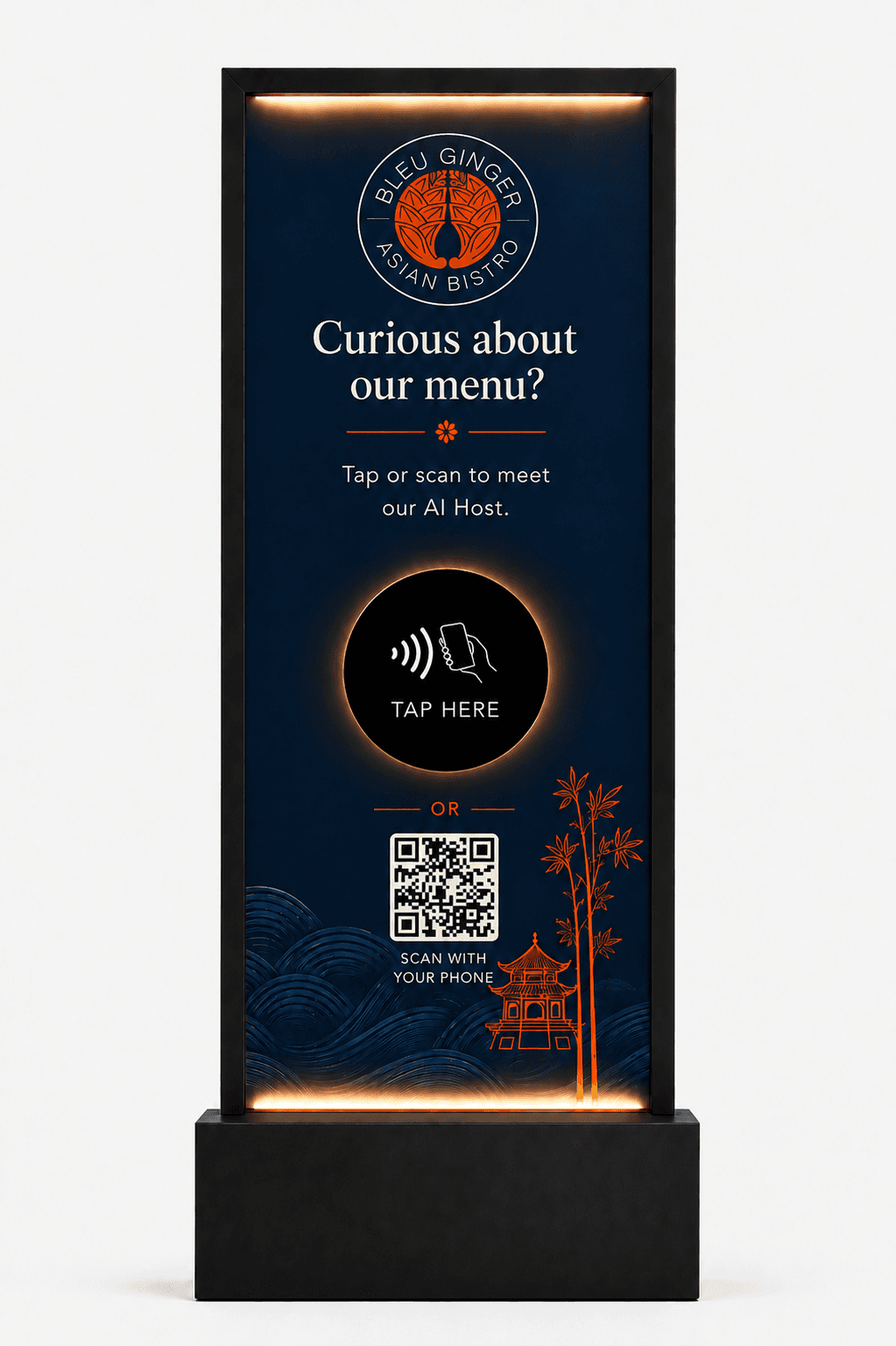
The sign is theirs, not ours.
The frame, the light, and the tap point are the standard build. Everything a guest actually reads is designed around the business before anything is fabricated — their crest, redrawn to sit on a backlit panel; their navy and copper, not a house palette; the bamboo and wave that run through their dining room; their own words at the top, not ours.
The software
The software looks like their restaurant too.
A guest who taps the sign lands on a page carrying Bleu Ginger's own name, crest, and colour — not ours. The photos on screen are the food on their menu, each one carrying a question a guest might actually ask. Tap one, and the host answers by name, in their voice, with the dishes to match.
- Their logo and name, top of screen.
- Hero photos of their food, each carrying a question.
- Tap a question, and the host replies — with dishes to match.
What they learned
One thing the sign revealed: guests ask about gluten-free options more than the menu ever suggested.
The menu listed two gluten-free dishes and left it at that. The sign's host fielded the question far more often than that would suggest — often enough that it was clearly the single thing most worth putting in writing. Guests asked about other things too, none of them written down anywhere a server would think to mention.
Guests also asked about—
- Is valet parking available?
- Do you have a kids menu?
- Can I bring my own wine?
- Are dogs allowed on the patio?
- Do you offer a tasting menu?
“I thought I was buying a way to answer questions. What I actually bought was a list of the things my restaurant never told anybody.”
Owner, Bleu Ginger